

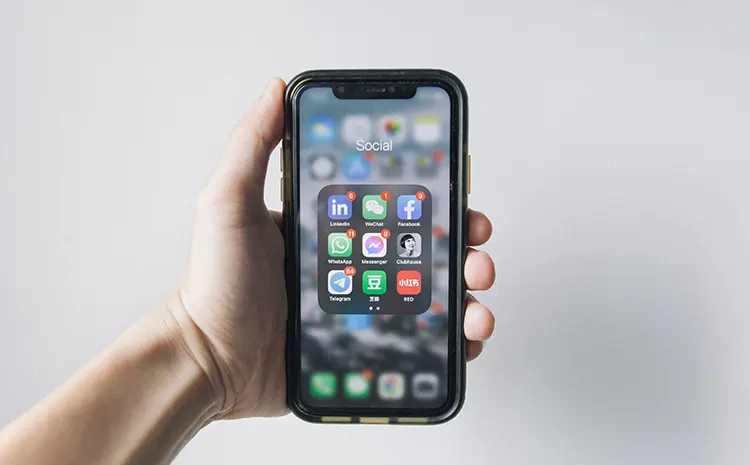
What Are Social Networks?
Social networks are digital platforms through which people, entities, and brands with common interests, activities, or relationships can create a network of contacts among themselves, interact, and establish connections.
Their use has become popular rapidly due to their great ability to connect us with people from all over the world; in addition, they play a critical role in the business world.
Despite these benefits, experts are increasingly concerned about the repercussions of misuse, and psychologists, doctors, and educators are studying the potential side effects of social media.
Advantages and Disadvantages of Social Networks
Although they have positive and negative aspects, many people, especially young users, find it difficult to imagine a world without them. Given this importance, this post will discuss the advantages and disadvantages of social networks so you can get the most out of them in your personal and professional life.
Advantages of Social Networks
Social networks offer several advantages in our personal and professional lives.
1. Improve Communication and Connectivity: Social networks facilitate communication with friends, family, and any user regardless of the geographical distance between them.
2. Increase Brand Visibility: They increase brand visibility. Social media has become a new market that companies have taken advantage of to advertise and create corporate profiles, as it facilitates connections between buyers and sellers worldwide.
3. Provide Job Opportunities: They offer job opportunities. Some networks, like LinkedIn, aim to create professional communities, allowing users to showcase their professional profiles. Many companies use this platform to search for candidates who fit their desired profile.
On the other hand, if you’re self-employed and want to expand your business, social media is essential. These days, businesses can create advertising campaigns on platforms such as Facebook or Instagram and reach targeted audiences with different budgets.
4. Provide Information and Knowledge Sharing: They are a source of information. Users can share their opinions and content through social media platforms. Thanks to social media and the internet, we live in a world where ideas flow freely, which can bring us many benefits since we can learn from other people, their customs, tastes, thoughts…
5. Offer Entertainment: They are a major source of entertainment. Brands increasingly see our use of social media as linked to leisure. We use them primarily to have fun and unwind.
6. Enable Immediate Communication: Immediate communication. Social media allows us to communicate any type of news to a large number of people instantly. On some networks, like Twitter, everyone knows about all events, regardless of their nature—social, political, cultural, or economic.
Disadvantages of Social Networks
As we have seen, networks offer many benefits if managed properly, but we must also be aware of their disadvantages to avoid misusing them.
1. Social Media Addiction and Excessive Use: They are addictive. Unfortunately, problematic social media use is a growing concern among researchers and health professionals. We are used to seeing teenagers, or even young children, carrying their mobile phones or tablets everywhere. This phenomenon is triggered by excessive and uncontrolled use of social media, which may be associated with negative emotional effects such as stress or anxiety.
Therefore, it is advisable to restrict use during the day, silence notifications, or not check them after certain hours of the night.
On the other hand, while they may not be addictive, research suggests that social media use can influence emotions and well-being, since we now know in real time about all the tragedies happening in the world. Such platforms can be beneficial for raising social awareness about certain issues, but on a personal level, it’s becoming clear that hearing bad news about which we can do nothing robs us of hope, energy, and motivation.
2. Scams and Data Theft: Scams and data theft. Social media generates problems such as identity theft, credit card fraud, and other types of scams. We’ve often seen e-commerce sites advertising products with great discounts, only for users to discover that the products didn’t exist and their credit card information had been stolen. The same thing happens with fake accounts, where someone impersonates another person to defraud the victim.
3. Spread of Harmful Opinions and Attitudes: They promote harmful opinions and attitudes. Both the internet and social media in general are important channels for transmitting messages; therefore, some individuals or groups may use these platforms to spread harmful or hateful content.
4. Cyberbullying and Online Harassment: Cyberbullying occurs when one user harasses another through social media. It can manifest in various ways, such as insults, the sharing of private information, and threats. Within this category, we can include grooming, also known as child sexual exploitation, which occurs when an adult harasses a minor online. This constitutes a criminal offence and must be reported immediately.
5. Fake News and Misinformation: Fake news. All kinds of information circulate on social media; sometimes, this information is false or not fully verified, which can lead to confusion among users and generate discrepancies.
6. Information Overload: Information overload. This term refers to the excess of information, the overload of content that makes it difficult to pay attention to a specific topic since we are exposed to thousands of stimuli daily.
Also Read: Social Networks: 5 Tips For Successful Communication
Social Networks For Business
If you own a business, you should know that social media has a number of advantages and disadvantages that can benefit you or, conversely, harm your brand. Therefore, you should understand them thoroughly.
Advantages of Social Networks for Businesses
1. Improve Brand Reputation and Trust: They improve brand reputation and trust: if your customers search for your business on social media and cannot find you, you may miss opportunities to connect with potential customers.
2. Increase Brand Visibility: They increase brand visibility: if you are on social media, users will see you, know that you exist and will be able to discover everything you have to offer, which will facilitate the purchase.
3. Build Customer Loyalty: Building customer loyalty: It’s very important to provide valuable content via social media, as this will connect you with your target audience. By working on this content well, it will be easier to build a loyal community and, consequently, increase sales.
4. Bring Website Traffic: Bringing traffic: If you create valuable content on social media, you will increase traffic to your website, making it easier to reach more people at a lower cost.
5. Understand Customers Better: Getting to know our customers. Social media allows us to understand our target audience and segment it accordingly. Social media provides us with statistics from which we can glean valuable information. Furthermore, other tools offer data and reports about our community.
6. Provide Immediate Customer Service: Immediate customer service channel. It’s a quick and easy way to resolve questions and problems, building customer trust. It has become an important method for handling complaints and customer questions, helping brands improve and correct errors quickly.
7. Influence the Sales Process: Influencing the sales process. Through various social media strategies, it’s possible to make users aware of the brand, empathise with it, and place it top of mind. Simply being on social media won’t automatically increase sales, but it does boost visibility, improve trust and reputation, which has a very positive impact on the buying process.
Disadvantages of Social Networks for Businesses
It is essential for a professional to know how to manage a crisis on social media, since poor management can have a very negative impact on the company and, above all, on the brand. Some of the disadvantages of social media for businesses are as follows:
1. Financial Investment: Financial investment: It’s a mistake to believe that a social media campaign is free. Professional social media management requires an investment of both time and money, as it demands qualified professionals and tools to measure, optimise, and understand the results of these campaigns.
2. Need for Qualified Professionals: Good professionals: As I mentioned in the previous point, if your goal is to increase visibility, generate leads, and position your brand, you need highly qualified professionals in the sector to carry out optimised campaigns; otherwise, it can have very negative consequences. Hence, the importance of hiring a skilled community manager who properly manages your brand’s online presence.
3. Cybersecurity Risks: Cyberattacks: When we’re on social media, we have to be aware that we’re exposed to various kinds of attacks, from trolls whose goal is to damage our brand through fake reviews and nasty comments to cyberattacks. Such attacks can trigger a reputation crisis.
4. Difficulty Disconnecting Outside Work Hours: This is a common problem for many freelancers, as they are constantly connected and find it very difficult to disconnect. Therefore, it’s essential to establish flexible work schedules so that the mind can disconnect from social media.
Conclusion
As this post has shown, social networks have advantages and disadvantages; it mainly depends on how we use them. If you run a business, the first thing you should do is an analysis in which you consider the objectives you want to achieve and the strategies you will implement to achieve them; don’t waste time waiting for a publication to provide you with the expected reach without further action.
In addition, you will need to measure all the actions you take to know at all times whether your strategy is correct. You’ll be missing out on a wide range of possibilities. On a personal level, we cannot imagine a world without social media. Therefore, and this principle is something we should all apply, we must use them consciously to minimise the drawbacks and maximise the benefits they offer.
Also Read: How To Sell More Using Social Networks