


Whether it’s a vehicle, a medical device, or a software platform, products often consist of numerous components that must work together reliably. This is precisely where the profession of systems engineer comes in. Instead of focusing solely on individual components, software components, or specialist areas, they consider the entire system and, in particular, the interfaces between the individual areas.
What Is a Systems Engineer? Definition and Key Responsibilities
The International Council on Systems Engineering (INCOSE) provides a formal definition of the discipline. According to INCOSE, systems engineering is a transdisciplinary and integrative approach that supports the realization, use, and retirement of engineered systems throughout their life cycles. A systems engineer must understand how individual components interact and how changes in one area affect the overall system.
Types of Systems Engineers and Their Areas of Specialization
Embedded Systems Engineer: Hardware and Software Integration
Computer systems that are part of a bigger product are called embedded systems. They do specific jobs within that product. You can find them in cars, factories, and medical equipment, for instance. These systems are designed to work together with the product to make it function properly.
An embedded systems engineer works where electronics and software meet. They do many things like create firmware, figure out what the system needs, design the architecture, and solve technical issues. To do this job, you need to know how to program in languages like C or C++. You also need to have experience with microcontrollers, how computers are built, and the basics of software.
IT Systems Engineer: Infrastructure and Operations
Typical areas of work for an IT systems engineer include server and platform infrastructure, networks, operating systems, automation, and the stable operation of business-critical IT services. Depending on the position, tasks range from planning and implementation to monitoring and maintenance, as well as troubleshooting and optimization of existing systems.
This means that IT systems engineers partially overlap with system administrators, IT architects, or DevOps engineers. However, a systems engineer’s focus is often more on design and architecture than on day-to-day operations. They consider dependencies between different technical components, develop solutions for new requirements, and coordinate changes with product development.
Key Skills Required to Become a Systems Engineer
Systems engineers have to be good at many things, like understanding technology and figuring out solutions to problems. Some key skills they need to have include
- Systems thinking is about knowing how all the parts of something work together. It’s about seeing how everything fits together and how each part affects the others.
- Technical knowledge: You need to understand hardware, software, networks, and system architecture. It depends on what you specialize in.
- For programming and scripting, you need to know languages like Python, C, or C++. It also depends on the job, so you might need to know scripting tools too.
- Fixing problems: Finding out what’s wrong with the technology and how to fix it without messing up other parts of the system.
- Working together is key: this means talking to people like software developers, hardware engineers, project managers, and other experts to get things done.
Also Read: Data Security Between Confidentiality, Availability, And Integrity
What Is the Difference Between a Systems Engineer and a Software Engineer?
| Aspect | Systems Engineer | Software Engineer |
| Main focus | Entire systems and component integration | Software applications and systems |
| Responsibilities | System requirements, architecture, integration, and testing | Software design, coding, debugging, and testing |
| Technical knowledge | Hardware, software, infrastructure, and system architecture, depending on the role | Programming languages, software architecture, and development tools |
| Main objective | Ensure different components work together reliably | Develop and maintain software solutions |
How to Become a Systems Engineer: Education and Career Path
There is no single prescribed training path to becoming a systems engineer. Depending on the industry, graduates come from fields such as computer science, electrical engineering, mechanical engineering, mechatronics, automotive engineering, or industrial engineering.
Master’s Degree in Systems Engineering
Those interested in pursuing a master’s degree in systems engineering can choose from specialized programs offered by various universities. These programs typically combine systems design, project management, and business administration, with a focus on planning and implementing complex projects.
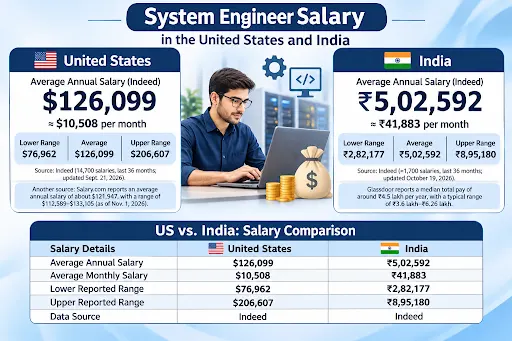
Systems Engineer Salary: How Much Do They Earn?
Professional Development: Further Training to Become an AI Software Engineer
With the increasing use of artificial intelligence in technical products, the demands placed on systems engineers are also changing. Especially where complex systems have a high software component, knowledge of software development and AI models is becoming increasingly important. Further training as an AI software engineer can therefore be an interesting specialization for systems engineers who want to develop their skills more in the area of software and artificial intelligence.
AI software engineering bootcamps teach people the skills they need to add AI to new software. They usually cover how to use AI to help with development, good software engineering habits, and how to actually use AI tools. The training is often led by experienced professionals who have worked in the industry, so they can share what they’ve learned in theory and what actually works in practice.
Also Read: How Does Machine Learning Impact Business?
 Lauren Morgan